
HDPE Waterproofing Membranes
For pre-applied work, request a grade documented to bond to freshly cast concrete. Use a compatible post-applied grade on prepared cured walls.
Coordinate waterproofing across the foundation slab, exterior walls and construction joints. Groundwater levels, access and the pour sequence determine where to use pre-applied membrane and where an exterior post-applied system can bond to an existing concrete surface.
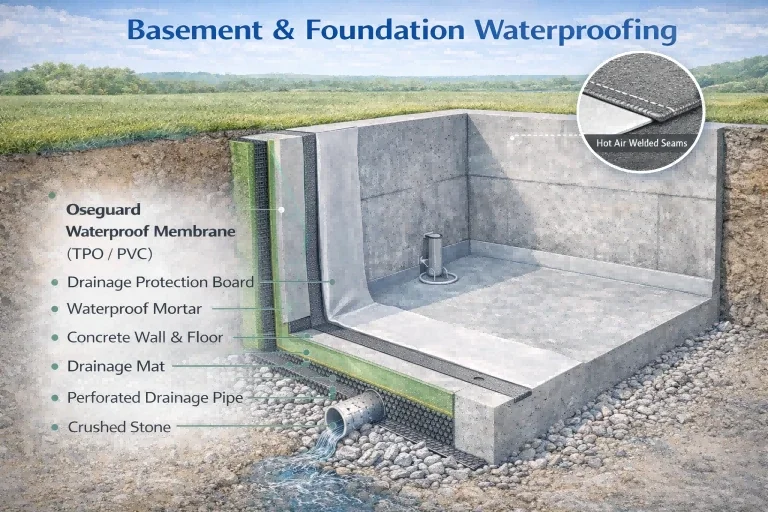
The example below is listed from the structural wall toward the backfill. At slab edges or blindside walls, specify the corresponding pre-applied detail and show how it connects to the wall system.
Specify the sequence and bonding face first. Ask for system drawings at the underslab-to-wall transition.
For pre-applied work, request a grade documented to bond to freshly cast concrete. Use a compatible post-applied grade on prepared cured walls.
Review the grade and welded detailing where the project specifies a PVC system.
Evaluate a compatible bituminous wall system with its required substrate preparation, protection and joint details.
Supply the design water table and pressure assumptions. Coordinate the membrane with the structural design.
Mark where waterproofing must be placed before the pour and where the exterior wall is accessible later.
Submit waterstop and penetration details. Confirm inspection and protection before concrete or backfill covers them.
Select a specific pre-applied grade documented to bond to fresh concrete. Confirm the bonding surface, laps and timing for the chosen system.
A drain manages collected water where the design allows drainage. The membrane, concrete and joints still need to meet the project’s waterproofing requirements.
Confirm the leak path, hydrostatic pressure and structural condition. An internal repair must be suitable for the direction of pressure and the defect being treated.
Include Basement & Foundation Waterproofing Systems in your project details and send the information below.