
Waterproof Coatings
Consider a compatible liquid-applied system for eligible substrates and intricate transitions. Confirm primer, reinforcement, service exposure and cure.
Locate the entry point, confirm the condition of the roof build-up and decide how much of it can stay. A repair around one drain, a liquid-applied restoration and a membrane overlay each need different substrate and moisture checks.
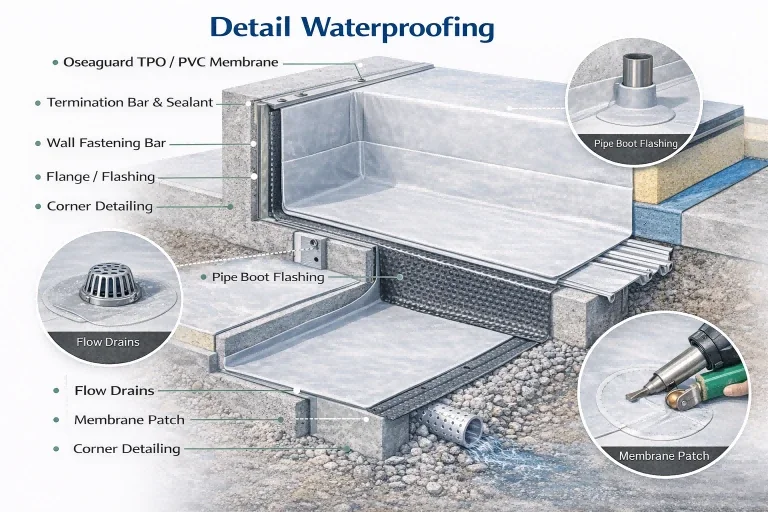
Begin with roof records and a condition survey. Have the project team confirm that the proposed materials can bond or be attached to the existing roof.
Identify the existing membrane before requesting a repair material. The field sheet, primer, adhesive and flashing should be documented for use together.
Consider a compatible liquid-applied system for eligible substrates and intricate transitions. Confirm primer, reinforcement, service exposure and cure.
Review compatible sheet or flashing repairs where the existing roof is PVC and the surface is suitable for the specified method.
Match the modifier, surfacing and attachment method where the existing or proposed assembly is modified bitumen.
Identify affected areas and have the project team define removals before covering the assembly.
Review termination, drain geometry or movement instead of repeating a surface patch.
Correct drainage causes and check the coating or membrane’s restrictions before restoration.
A compatible coating can restore eligible areas. First verify whether water enters at a detail, through damaged substrate, or from another part of the building.
Consider a recover only when the existing roof is suitable, moisture issues are addressed, the deck can support it and local requirements allow it.
Send an overview, close-ups of seams and drains, and images of changes in material or damaged areas. Mark the leak locations and any known wet insulation.
Include Roof Waterproofing Repair & Retrofit in your project details and send the information below.