
PVC Waterproof Membrane
Review the specified tunnel grade, weld and fixing details for curves and changes of section.
Select a tunnel membrane after the design team has defined how the structure will manage groundwater. The choice between a drained lining and one designed to resist water pressure affects the membrane, seam checks, fixings and transitions around the tunnel.
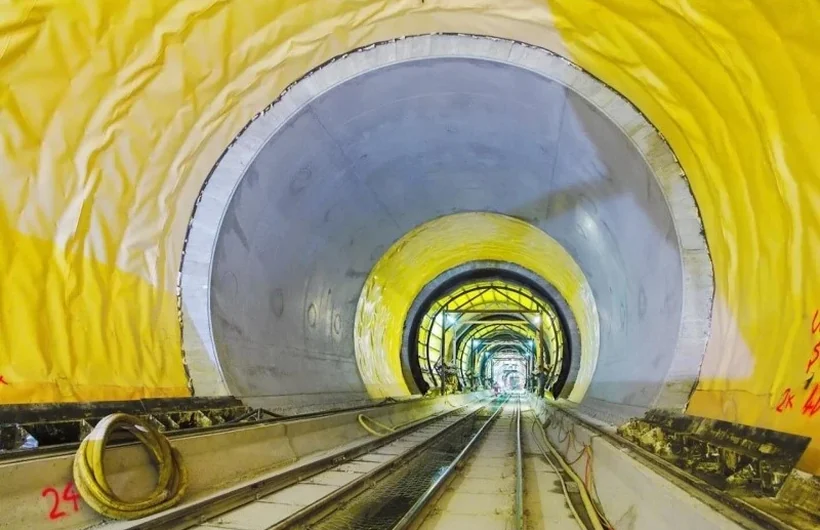
This example is listed from the prepared ground-side support toward the interior lining. The project’s drained or undrained design sets the actual layer sequence.
Select the membrane with its seam and fixing details. Request compatibility data where drainage and protective products contact the membrane.
Review the specified tunnel grade, weld and fixing details for curves and changes of section.
Evaluate the nominated grade and joining method where the drawings specify an HDPE barrier or lining zone.
Review the HDPE core and bonded protection separately. Confirm the sheet’s suitability and weld edges for the specified tunnel system.
Confirm water head, pressure assumptions, permissible discharge and drainage maintenance access.
Identify bored, mined or cut-and-cover sections, along with cross-passages, shafts and changes in method.
Provide the quality plan, test methods and details at invert, wall and crown transitions.
A drained assembly manages groundwater through designed collection. An undrained assembly is designed for the specified groundwater loads. The project team sets the strategy based on ground and discharge conditions.
Select the documented membrane for each zone. Compare fixing, seam design, geometry, chemical compatibility and the inspection plan.
Plan installation inspections and any specified non-destructive or destructive checks before the membrane is covered or concrete placement limits access.
Include Tunnel Waterproofing Membrane Systems in your project details and send the information below.