
Canals and Reservoir Linings
Share the prepared subgrade, cover and expected loads to match the fabric-facing configuration to the section.
Oseaguard composite HDPE geomembrane combines an HDPE barrier sheet with a protective geotextile or cushioning layer on one or both faces. Specify the HDPE core and the fabric separately, then confirm the joins that maintain continuity of the barrier across panels.
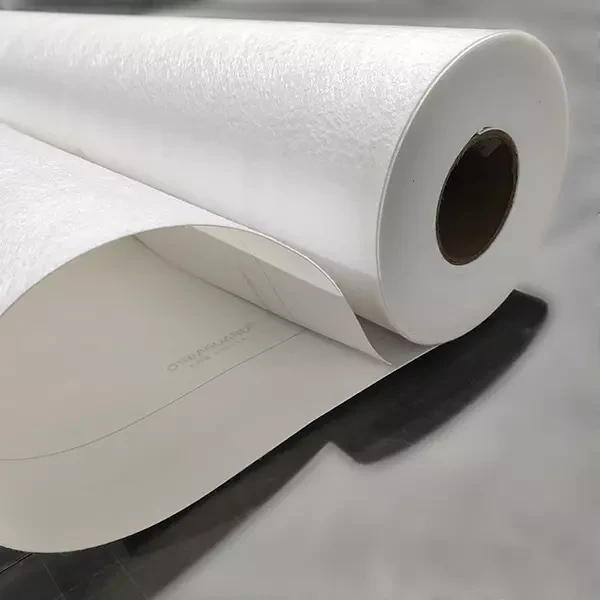
Give the HDPE thickness in millimeters and the required fabric mass for each face in grams per square meter. Include a section drawing to show which side of the roll faces the subgrade and which faces the cover.
| Property | Product reference |
|---|---|
| Barrier | HDPE membrane core. Confirm nominal thickness and tolerances separately. |
| Fabric or cushion | Specify material, structure and mass per unit area for each face |
| Layer configurations | Single-sided or double-sided composite, according to the design |
| Roll dimensions | Confirm width, length and any weldable edge allowance for the offered grade |
| Joining detail | Confirm how the HDPE core will be joined and how fabric will be treated at seam areas |
| Performance data to request | Barrier test data, puncture performance, and the laminate bond test where specified |
For projects citing GB/T 17642-2025 for nonwoven composite geomembranes, request the applicable data for the quoted construction and core. Include the specific puncture or interface tests called for by the design.
The HDPE core provides the barrier and the bonded fabric can protect it from contact with other layers. Specify a separate drainage path where required. Request the factory’s seam detail, including any unlaminated weld edge and how protection is continued over the seam after inspection.
Review the tested protection level against the materials touching the liner and the loads expected in service.
Share the prepared subgrade, cover and expected loads to match the fabric-facing configuration to the section.
Confirm the core grade, operating conditions and puncture protection around drains and penetrations.
Coordinate the designated membrane, cushion, drainage and protection layers. Check that the panel seams and terminations work with the project section.
Provide the minimum HDPE core thickness and specify the fabric mass on each face. The full laminate thickness includes both materials.
The fabric is selected for the functions documented for the composite. Specify a dedicated drainage product and flow capacity where the design calls for water conveyance.
Ask for the specified weldable edge and the panel seam detail. The design should define how the core seam is joined, inspected and protected where the fabric changes at the lap.
Select HDPE geomembrane in the form and include Composite HDPE Geomembrane in your project details. Send the following information with your request.