
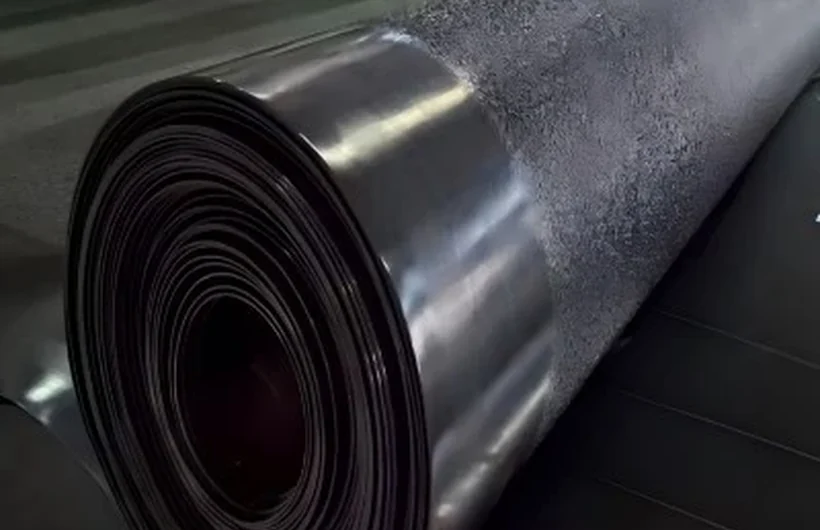
Smooth HDPE Geomembrane
Compare for supported floors and flatter zones where project testing supports the interface design.
A landfill liner is part of a containment system that includes the subgrade, a barrier and leachate collection. Smooth and textured HDPE can serve different zones of one cell. Select the surface and thickness using the approved drawings and test data for the actual materials touching the sheet.
This illustrates the role of each layer. The site permit and design determine whether the cell uses a composite, double-liner or another system and which protection and drainage layers are required.
Use the approved lining section and performance requirements to decide where smooth, textured or a protected arrangement belongs.
Compare for supported floors and flatter zones where project testing supports the interface design.
Review one- or two-sided texture where side-slope stability depends on interface shear.
Review bonded geotextile if the drawings specify it. Confirm the core, cushion, seam detail and permitted arrangement.
Identify the actual adjoining soil, clay or geosynthetic layers. Use site-specific shear data as specified.
Provide expected chemistry and temperature along with the liner and collection sections.
Request roll traceability and the required field seam tests. Coordinate inspection before covering the liner.
The approved design determines surface requirements by zone. Side slopes often need separate interface checks with the actual materials and loads.
Compare the proposed assembly with the permit and jurisdiction’s definition. A bonded cushion describes a product configuration, while the permit typically specifies the barrier and its adjoining low-permeability layer.
Use the panel plan, including laps, slopes, anchor trenches, corners and transitions. Confirm safe handling lengths and widths for the site.
Include Landfill Liner Systems in your project details and send the information below.